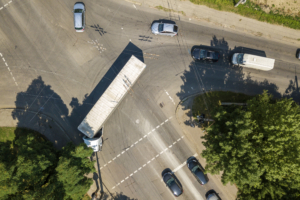
Commercial truck accidents rarely have only one possible cause. Investigators may need to examine the actions of the driver as well as the trucking company’s hiring, training, scheduling, maintenance, and safety practices.
Common contributing factors include:
- Driver fatigue and insufficient rest
- Distracted driving
- Speeding or driving too fast for weather and traffic conditions
- Following too closely
- Unsafe lane changes
- Failure to check blind spots
- Improper turns
- Driving under the influence of alcohol or drugs
- Inadequate driver training
- Poor truck maintenance
- Defective brakes or tires
- Improperly loaded or unsecured cargo
- Overloaded trailers
- Failure to account for snow, ice, fog, or rain
- Pressure to meet unrealistic delivery schedules
- Mechanical failures
- Inadequate trucking-company supervision
Determining what actually happened may require considerably more evidence than a standard accident report.
Experienced Portland semi-truck accident attorneys can seek evidence concerning the truck, driver, carrier, cargo, maintenance history, electronic records, and other factors that may help establish liability.
Driver Fatigue and Portland Truck Accidents
Fatigue is an especially important concern in the trucking industry.
Commercial drivers can spend long periods behind the wheel while traveling hundreds of miles in a single shift. Drivers may operate early in the morning, late at night, or through changing weather conditions. Delivery deadlines can add additional pressure.
Federal hours-of-service regulations therefore restrict how long many commercial drivers may drive.
Under current Federal Motor Carrier Safety Administration rules, property-carrying commercial drivers generally may drive a maximum of 11 hours after 10 consecutive hours off duty. Drivers generally may not drive beyond the 14th consecutive hour after coming on duty. Regulations also address breaks and cumulative weekly working hours, although exceptions can apply to particular operations.
These rules are designed in part to reduce fatigue-related safety risks.
A driver who becomes excessively tired may experience delayed reactions, poor judgment, difficulty maintaining lane position, reduced awareness, or even fall asleep.
When fatigue is suspected, a Portland truck accident attorney may examine electronic logging device information, driver logs, dispatch communications, fuel receipts, toll information, GPS records, bills of lading, and other evidence to determine how long the driver had actually been working.
Semi-Truck Maintenance and Mechanical Failures
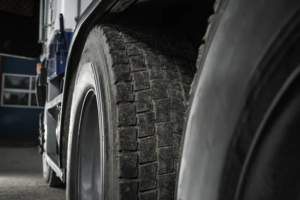
Commercial trucks travel many miles while carrying heavy loads, placing substantial stress on brakes, tires, steering systems, suspension components, and other equipment.
Maintenance is therefore a major safety issue.
A poorly maintained truck can become dangerous even when the driver is otherwise operating carefully.
Brake Failures
Truck brakes must repeatedly slow an extremely heavy vehicle. Worn brake components, improper adjustment, inadequate inspection, or other defects can dramatically affect a driver’s ability to stop.
Brake problems become particularly dangerous when a truck encounters stopped traffic unexpectedly.
Tire Failures
Commercial truck tires are subjected to heavy loads and extensive mileage. Excessive wear, underinflation, improper maintenance, damaged tires, or defective products can contribute to blowouts.
A sudden tire failure can cause a driver to lose control or scatter dangerous debris across the roadway.
Steering and Suspension Problems
Failures involving steering and suspension components can make an already difficult-to-control commercial vehicle unstable.
Lights and Reflective Equipment
Commercial trucks frequently operate at night and during poor weather. Missing or malfunctioning lights and inadequate reflective equipment can make a trailer difficult for other motorists to see.
Trailer and Coupling Problems
The tractor and trailer must remain securely connected. Problems involving coupling devices can potentially allow a trailer to separate or become unstable.
A Portland semi-truck accident attorney investigating a crash may seek inspection reports, repair invoices, maintenance records, post-crash inspection information, and other documentation to determine whether a mechanical or maintenance problem played a role.
Improper Cargo Loading and Truck Accidents
Cargo can significantly affect how a truck handles.
Improperly secured freight can shift during acceleration, braking, or cornering. A sudden weight shift may make the trailer unstable and contribute to rollover or loss-of-control accidents.
Cargo can also fall from trailers and create hazards for surrounding motorists.
Depending upon the circumstances, responsibility might extend beyond the driver or trucking company to a shipper, loading contractor, freight company, or another party involved in preparing the load.
Dangerous Roads and Truck Accident Hot Spots in Portland
No Portland road should automatically be characterized as dangerous solely because an accident occurred there. Nevertheless, several heavily traveled corridors deserve particular attention because they combine substantial traffic, highway speeds, commercial vehicles, merging traffic, intersections, pedestrians, or changing weather conditions.
Interstate 295
I-295 is one of Portland’s most important transportation corridors and carries passenger and commercial traffic through the city.
Highway speeds, entrance and exit ramps, congestion, and sudden traffic slowdowns can create significant challenges when large trucks are present.
For example, Maine State Police reported a June 2026 crash on I-295 northbound near Forest Avenue in which a commercial vehicle struck a pickup after traffic slowed suddenly. A passenger in the pickup suffered serious injuries.
The I-295 corridor and its Portland interchanges therefore warrant particular caution for drivers traveling alongside tractor-trailers.
I-295 and Forest Avenue
The Forest Avenue area combines highway traffic with vehicles entering and leaving one of Portland’s major surface-road corridors.
Changing lanes, merging vehicles, congestion, and commercial traffic can increase the complexity of driving in this area.
Franklin Street
Franklin Street provides an important connection between the Portland peninsula and I-295. Drivers may encounter changing traffic volumes, intersections, turning vehicles, cyclists, pedestrians, and commercial traffic.
Commercial Street and the Waterfront
Portland’s waterfront is an active commercial area.
Commercial Street can have delivery vehicles, trucks serving waterfront businesses, passenger vehicles, pedestrians, cyclists, and tourism-related traffic occupying the same general corridor.
The combination of large vehicles and dense urban activity requires particular caution.
Forest Avenue
Forest Avenue is another important Portland transportation corridor. It carries significant local traffic and provides connections to businesses, neighborhoods, and I-295.
Trucks traveling through areas with frequent intersections, driveways, traffic signals, and turning vehicles have less margin for error than they do on open highways.
Brighton Avenue and the Route 25 Corridor
Brighton Avenue is another major route into and out of Portland. Commercial vehicles may share the corridor with commuters and local traffic, particularly around busy intersections and commercial areas.
Maine Turnpike and Greater Portland Connections
Commercial traffic traveling into or around Portland may also use the Maine Turnpike and connecting highways. Highway speeds can increase the severity of truck collisions, especially when traffic slows unexpectedly or winter weather reduces traction.
Maine Winters Create Additional Trucking Hazards
Portland drivers understand how quickly Maine weather can affect driving conditions.
Snow and ice reduce traction. Freezing rain can create unexpectedly slippery roads. Heavy rain and fog can limit visibility, while winter storms can obscure pavement markings and increase stopping distances.
These conditions become especially important for large trucks.
A professional truck driver should account for weather, visibility, traffic, load weight, and roadway conditions when determining a safe operating speed and following distance. Merely traveling at or below the posted speed limit does not necessarily mean a speed is appropriate for existing conditions.
Who Can Be Liable for a Portland Truck Accident?
One reason truck accident claims can become complicated is that several parties may potentially bear responsibility.
Truck Driver
A driver may be responsible for speeding, distracted driving, unsafe lane changes, fatigue, impairment, following too closely, or other negligent conduct.
Motor Carrier
The trucking company may face liability depending on the circumstances surrounding the crash and the driver’s relationship with the company.
Claims may also involve allegations concerning hiring, training, supervision, maintenance, safety procedures, or scheduling.
Maintenance Company
If an outside company negligently inspected or repaired a truck, its conduct may become relevant to a mechanical-failure accident.
Cargo or Loading Company
Companies involved in loading and securing freight may potentially bear responsibility when shifting or falling cargo contributes to an accident.
Truck or Parts Manufacturer
A defective tire, brake component, steering system, coupling device, or other product may create a potential product-liability issue.
Identifying every responsible party is one reason working with an 18-wheeler accident attorney in Portland Maine can be particularly important.
Maine Comparative Negligence Law
Fault is important in Maine personal injury cases.
Under Maine’s comparative negligence statute, an injured person’s own fault does not automatically defeat a claim. Recoverable damages can be reduced to account for the claimant’s responsibility. However, if a claimant is found equally at fault, Maine law provides that the claimant may not recover.
Truck insurers may therefore have a significant financial incentive to argue that another driver contributed to the collision.
An attorney can investigate the evidence and respond to disputed allegations concerning fault.
What Compensation May Be Available After a Truck Accident?
The damages available depend upon the facts of the individual case.
A truck accident injury claim may potentially seek compensation for losses such as:
Medical expenses. This can include emergency treatment, hospitalization, surgery, physician care, diagnostic testing, rehabilitation, physical therapy, medication, and other medically necessary treatment.
Future medical needs. Serious injuries may require future surgery, rehabilitation, home health assistance, medical equipment, or long-term treatment.
Lost income. Injured people may lose wages while recovering.
Reduced earning capacity. Permanent injuries can interfere with a person’s ability to return to the same occupation or earn the same income in the future.
Pain and suffering. Serious injuries can cause substantial physical pain and affect daily activities and quality of life.
Permanent impairment and disability. Catastrophic injuries can permanently change a person’s mobility, independence, and ability to work.
Property damage. Compensation may also be available for damage to a vehicle and other property.
Wrongful death claims may involve additional damages when a truck accident results in a fatality.
The appropriate damages must be evaluated according to the specific evidence and applicable Maine law.
Common Injuries in Portland Semi-Truck Accidents
The forces generated during truck crashes can produce catastrophic injuries, including:
- Traumatic brain injuries
- Concussions
- Spinal cord injuries
- Paralysis
- Neck and back injuries
- Herniated or damaged discs
- Broken bones
- Crush injuries
- Internal organ damage
- Internal bleeding
- Burns
- Severe lacerations
- Shoulder and knee injuries
- Amputations
- Permanent scarring
- Psychological trauma
- Fatal injuries
Some symptoms may not be immediately obvious. Anyone experiencing pain or other symptoms after a serious collision should consider obtaining prompt medical evaluation.
What Should You Do After a Truck Accident in Portland?
Your health should come first. Seek emergency medical assistance when necessary and obtain appropriate evaluation even if you initially believe your injuries are manageable.
Report the crash to law enforcement and provide accurate information without guessing about matters you did not observe.
When it can be done safely, photographs or video of vehicle positions, skid marks, debris, road conditions, truck identification numbers, company markings, license plates, and visible injuries may become useful evidence.
Obtain contact information from witnesses whenever possible.
Be cautious about giving recorded statements to trucking-company insurers before understanding your rights. Commercial accident investigations can begin rapidly, and insurance representatives may contact injured people soon after the collision.
Finally, consider contacting a Portland truck accident lawyer promptly so important evidence can be identified and preservation efforts can begin.
Evidence That Can Be Important in a Truck Accident Case
Commercial truck cases can involve evidence unavailable in ordinary passenger-vehicle accidents.
Depending upon the circumstances, an investigation may seek:
- Electronic logging device records
- Driver qualification files
- Hours-of-service records
- Dispatch communications
- GPS and telematics data
- Truck inspection records
- Maintenance and repair histories
- Post-crash inspection results
- Cargo and loading documents
- Bills of lading
- Driver training information
- Drug and alcohol testing records when applicable
- Dash-camera footage
- Nearby surveillance footage
- Event data recorder information
- Cellphone records when legally obtainable
- Witness statements
- Police reports
- Photographs and measurements from the accident scene
Some electronic information can be overwritten or records may eventually be disposed of under applicable retention policies. Early investigation can therefore be extremely important.
Maine’s Time Limit for Filing an Injury Lawsuit
Deadlines should never be assumed without reviewing the particular case.
Maine’s general civil statute of limitations provides that civil actions generally must be commenced within six years after the cause of action accrues unless another provision establishes a different deadline.
Exceptions and different rules can apply depending upon the claim, defendant, circumstances, and type of action.
Waiting years to investigate a truck crash is also risky even when a lawsuit deadline has not expired. Witness memories fade, vehicles are repaired, physical evidence disappears, businesses change records, and electronic data can be lost.
Speaking with a Portland truck accident attorney early can help determine which deadlines apply to a particular claim.
Why Hire a Portland Truck Accident Lawyer?
A semi-truck accident claim can put an injured individual against sophisticated commercial defendants and insurance companies.
A lawyer can investigate the crash, preserve evidence, identify potential defendants, review trucking records, analyze insurance coverage, work with qualified experts when appropriate, document damages, negotiate with insurers, and prepare a case for litigation when necessary.
This can be especially important when injuries are severe and future medical or employment consequences are uncertain.
Accepting an early settlement before the long-term effects of an injury are understood may create serious problems. Once a claim is fully and finally released, an injured person generally cannot simply reopen it because medical complications later become worse.
At Independence Law Maine, our goal is to help injured people understand their legal options and make informed decisions about their claims.
Frequently Asked Questions About Portland Truck Accidents
How is a truck accident different from a normal car accident?
The most obvious difference is the size and weight of the vehicles, but the legal differences can be just as significant.
Commercial trucking is heavily regulated. A truck accident investigation can involve federal regulations, driver logs, electronic data, inspection requirements, maintenance records, cargo documentation, and corporate safety procedures.
There may also be multiple potentially responsible businesses and multiple insurance policies.
For these reasons, a truck collision should not automatically be handled in the same manner as a routine two-car accident.
Who can I sue after an 18-wheeler accident in Portland?
That depends upon why the accident happened.
Potentially responsible parties can include the truck driver, motor carrier, truck owner, maintenance contractor, cargo-loading business, shipper, equipment manufacturer, or another company.
An 18-wheeler accident lawyer in Portland Maine can investigate the relationships among the companies involved and determine which parties may have legal responsibility.
What if the trucking company says I caused the accident?
A trucking company’s assertion does not necessarily determine legal responsibility.
Physical evidence, photographs, electronic truck data, witness statements, video, vehicle damage, driver records, and expert analysis may provide a more complete picture.
Maine’s comparative negligence law makes the allocation of responsibility particularly important, which is one reason an independent investigation can matter.
How much is my Portland truck accident claim worth?
There is no responsible way to assign a value without examining the individual circumstances.
Important considerations can include the severity and permanence of injuries, medical expenses, future treatment, lost wages, reduced earning capacity, pain and suffering, disability, available insurance, and evidence concerning liability.
A person with temporary injuries and a complete recovery has a very different case from someone who suffers permanent spinal cord or brain damage.
Should I talk to the trucking company’s insurance adjuster?
You should be cautious.
An insurer may request a recorded statement, medical authorization, or other information while investigating the claim. What you say may later become relevant to disputes concerning fault, injuries, or damages.
You can obtain legal advice before deciding how to respond to an insurance company’s requests.
What if I felt fine immediately after the crash?
Some injuries are apparent immediately, while others may become more noticeable over the hours or days following an accident.
Seek appropriate medical attention if you develop pain, dizziness, headaches, numbness, weakness, confusion, limited mobility, or other concerning symptoms.
Medical evaluation protects your health and also creates contemporaneous documentation of your condition.
Can I recover compensation if I was partially responsible?
Potentially.
Maine follows a comparative negligence system. Damages may be reduced to account for an injured claimant’s share of responsibility. Under Maine law, however, a claimant found equally at fault may not recover.
The precise allocation of responsibility can therefore have major financial consequences.
What happens if poor truck maintenance caused the accident?
A maintenance-related accident can require investigation beyond the driver’s conduct.
Records may reveal when the truck was inspected, which defects were discovered, whether repairs were completed, and who performed the work.
Depending upon the evidence, responsibility might involve the carrier, truck owner, maintenance contractor, parts manufacturer, or multiple parties.
How does a lawyer investigate driver fatigue?
A lawyer may compare electronic logs with other records to reconstruct the driver’s activities before the accident.
Electronic logging information, GPS records, dispatch messages, receipts, shipping documents, toll records, and other evidence may help determine whether recorded working and driving times accurately reflect what occurred.
Federal hours-of-service rules generally limit property-carrying drivers to 11 hours of driving following 10 consecutive hours off duty and restrict driving after the 14th consecutive hour after coming on duty, subject to applicable exceptions.
How long do I have to file a truck accident lawsuit in Maine?
Maine’s general statute governing civil actions establishes a six-year limitations period, but exceptions and other deadlines can apply.
You should not assume that six years applies to every potential claim or defendant.
More importantly, waiting until a deadline approaches can make a case considerably harder to investigate. Evidence can disappear long before the statute of limitations expires.
Why should I hire a Portland semi-truck accident attorney?
Commercial truck accident cases can require extensive evidence and an understanding of both Maine negligence law and federal trucking regulations.
A Maine semi-truck accident attorney can investigate the driver’s conduct, trucking-company practices, maintenance history, electronic data, cargo issues, insurance coverage, and other potential causes while the injured person concentrates on medical recovery.
Legal representation can also help protect an injured person’s interests when dealing with insurers and commercial defendants.

Contact a Portland Truck Accident Lawyer at Independence Law Maine
A serious truck accident can change your life in seconds. Medical bills can accumulate while an injury prevents you from working, and victims may face months or years of rehabilitation. At the same time, trucking companies and their insurers may begin investigating immediately.
You do not have to navigate those issues without legal guidance.
If you or someone you love has been injured in a collision involving a tractor-trailer, semi-truck, commercial vehicle, or 18-wheeler, Independence Law Maine can help you understand your legal options.
Our firm can investigate how the accident occurred, evaluate potential liability, identify relevant insurance coverage, preserve important evidence, document your losses, and pursue compensation available under Maine law. Contact us for a free consultation.
Whether you are searching for a Portland truck accident lawyer, Portland truck accident attorney, Portland semi-truck accident lawyer, Portland semi-truck accident attorney, 18-wheeler accident attorney in Portland Maine, or 18-wheeler accident lawyer in Portland Maine, Independence Law Maine is ready to discuss your case and help you determine the appropriate next steps after a serious commercial truck accident.
Contact Independence Law Maine to discuss your Portland truck accident and injury claim.