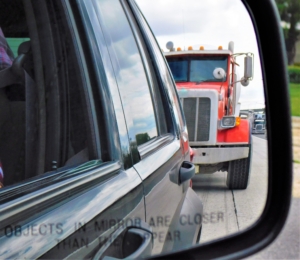
There is rarely a single universal explanation for truck crashes. Driver conduct is important, but the investigation should not necessarily stop with the person behind the wheel.
A trucking company’s hiring, training, maintenance, scheduling, supervision, and safety practices can also become relevant.
Some common causes and contributing factors include:
- Driver fatigue
- Speeding
- Distracted driving
- Following too closely
- Unsafe lane changes
- Failure to check blind spots
- Driving too fast for snow or ice
- Improper turns
- Driver inexperience
- Inadequate training
- Alcohol or drug impairment
- Defective brakes
- Worn or damaged tires
- Steering or suspension failures
- Inadequate inspections
- Poor truck maintenance
- Overloaded trailers
- Improperly distributed cargo
- Unsecured freight
- Unrealistic delivery schedules
Determining which factor caused a particular accident may require reviewing records that are controlled by the trucking company or other commercial entities.
A Bangor truck accident attorney can work to obtain and preserve this evidence before it becomes unavailable.
Truck Driver Fatigue and Hours-of-Service Regulations
Driver fatigue is a major safety concern in commercial trucking.
Long-distance drivers can spend many hours behind the wheel. A driver may operate overnight, early in the morning, or after spending substantial time loading, unloading, inspecting, or waiting for cargo.
Fatigue can affect reaction time, concentration, decision-making, and situational awareness.
A severely fatigued driver may drift between lanes, overlook changing traffic conditions, miss signs or signals, react too slowly to stopped vehicles, or fall asleep behind the wheel.
Federal hours-of-service regulations are intended to limit excessive driving and working periods.
Under current Federal Motor Carrier Safety Administration rules, property-carrying commercial drivers generally may drive no more than 11 hours after 10 consecutive hours off duty. They generally cannot drive beyond the 14th consecutive hour after coming on duty following the required off-duty period. Regulations also address breaks and cumulative weekly working limits, although exceptions may apply to certain operations.
When fatigue may have contributed to an accident, a Bangor semi-truck accident lawyer can investigate evidence such as electronic logging device data, dispatch records, GPS information, toll records, fuel receipts, bills of lading, delivery information, and communications between the driver and trucking company.
These records may help reconstruct what the driver was doing in the hours and days before the collision.
Semi-Truck Maintenance Problems
Commercial trucks accumulate enormous mileage, often while carrying extremely heavy loads.
Brakes, tires, steering systems, suspension components, lights, coupling equipment, and other mechanical systems therefore require appropriate inspection and maintenance.
Failure to properly maintain a truck can turn an ordinary mechanical problem into a highway emergency.
Brake Problems
Stopping an 18-wheeler places substantial demands on its braking system.
Worn components, inadequate adjustment, delayed repairs, poor inspections, or other brake problems may reduce stopping capability.
Brake deficiencies become particularly dangerous when traffic unexpectedly backs up on I-95 or another high-speed road.
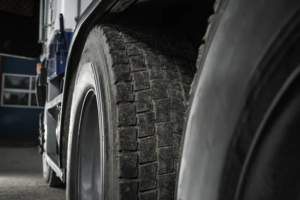
Tire Blowouts
Commercial truck tires must withstand substantial weight, heat, mileage, and road conditions.
Excessive wear, underinflation, improper maintenance, manufacturing defects, or damage can contribute to tire failures.
A blowout may cause the driver to lose control. Pieces of tire can also become roadway hazards for vehicles traveling behind the truck.
Steering and Suspension Failures
Steering and suspension systems are essential to maintaining control of a heavy commercial vehicle.
Mechanical defects affecting these systems may cause instability or make it difficult for a driver to respond to an emergency.
Lighting Problems
Trucks frequently operate at night and during rain, snow, fog, and other low-visibility conditions.
Brake lights, turn signals, headlights, clearance lights, and required reflective equipment help other drivers identify the truck and anticipate its movements.
Tractor-Trailer Coupling Equipment
The tractor and trailer must remain securely connected.
Problems with coupling equipment can create extremely dangerous situations if a trailer becomes unstable or separates from the tractor.
When a mechanical problem is suspected, a Bangor semi-truck accident attorney may seek maintenance logs, inspection reports, repair invoices, roadside inspection information, and other records.
Improperly Loaded and Unsecured Cargo
A tractor-trailer’s cargo affects the way the vehicle handles.
Freight that is improperly distributed can alter the truck’s center of gravity. Cargo that is inadequately secured may move when the truck accelerates, brakes, or turns.
A sudden shift can make the trailer unstable and contribute to a rollover or loss-of-control accident.
Freight can also fall from an open or inadequately secured trailer and strike another vehicle or create an obstacle in the roadway.
Depending upon who loaded and secured the cargo, potential responsibility could extend beyond the truck driver and motor carrier.
Truck Accident Hot Spots and Heavily Traveled Roads in Bangor
Truck accidents can happen anywhere, and identifying a particular roadway does not mean that every portion of it is inherently unsafe. However, Bangor has several transportation corridors where passenger vehicles regularly interact with commercial traffic, high speeds, intersections, merging vehicles, and changing weather conditions.
Interstate 95
I-95 is one of the most important commercial transportation routes serving Bangor and eastern and northern Maine.
Tractor-trailers share the interstate with commuters, tourists, local motorists, and other commercial vehicles. Highway speeds mean drivers have less time to react when traffic suddenly slows.
Bangor’s exits and interchange areas create additional merging and lane-changing activity.
The commercial-vehicle presence on this corridor is not theoretical. In August 2026, Maine State Police reported receiving 14 emergency calls concerning an erratically driven box truck traveling on I-95. Police reported that the vehicle exited at Bangor’s Exit 187/Hogan Road before returning to the interstate and later traveling the wrong way in the southbound lanes. No injuries were reported in that incident.
Interstate 395
I-395 is another important Bangor-area transportation corridor and provides connections between I-95 and communities and commercial areas east of Bangor.
Highway speeds, merging traffic, changing lanes, and commercial vehicles can create conditions in which a driving error has serious consequences.
Hogan Road and Exit 187
Hogan Road contains substantial retail and commercial development and connects with I-95.
Motorists may encounter trucks entering or leaving the interstate, delivery vehicles serving commercial properties, frequent turning movements, and substantial passenger traffic.
Broadway and the I-95 Area
Broadway is another heavily traveled Bangor corridor with access to I-95.
Drivers encounter traffic lights, businesses, intersections, turning traffic, and vehicles traveling to and from the interstate.
The combination of local traffic and larger commercial vehicles requires drivers to remain alert, particularly near interchange and intersection areas.
Route 2
U.S. Route 2 is an important east-west route through Maine and carries both local and commercial traffic.
Drivers can encounter tractor-trailers, delivery vehicles, commuters, and other traffic traveling between Bangor and surrounding communities.
Route 15
Route 15 provides another transportation connection serving Bangor and the broader region.
Commercial traffic using regional routes can present different challenges from interstate trucking because drivers may encounter intersections, changing speed limits, businesses, residential areas, and local traffic.
Route 222 and Union Street
Union Street/Route 222 provides access to Bangor International Airport and other commercial and industrial areas.
Trucks and other commercial vehicles may interact with passenger traffic, airport-related traffic, turning vehicles, and businesses along this corridor.
Bangor Winters and Commercial Truck Accidents
Winter driving deserves special attention in Bangor.
Snow, freezing rain, black ice, blowing snow, and rapidly changing temperatures can make roads difficult to navigate.
These conditions can be particularly dangerous for tractor-trailers.
A large truck already requires considerable space to stop. Snow and ice can further reduce traction and increase the distance needed to slow safely.
Drivers must also consider visibility and road conditions when selecting an appropriate speed.
A posted speed limit represents a maximum under appropriate conditions; it does not necessarily mean that traveling at that speed is reasonable during a snowstorm or when a roadway is covered with ice.
Winter weather can also contribute to jackknife crashes when the tractor loses traction while the trailer continues moving.
An experienced commercial driver should adjust speed, following distance, braking, and other driving behavior according to existing conditions.
Who May Be Responsible for a Bangor Truck Accident?
One of the most important questions following a truck crash is who can legally be held responsible.
There may be more than one answer.
The Truck Driver
A driver may be responsible when negligent conduct contributes to the accident, including speeding, distracted driving, fatigue, impairment, unsafe lane changes, following too closely, or failure to respond appropriately to weather.
The Motor Carrier
The trucking company may also have legal responsibility depending upon the circumstances and its relationship with the driver.
The carrier’s own practices may become relevant, including driver hiring, training, supervision, scheduling, maintenance, and compliance with applicable safety requirements.
Maintenance Contractors
Some trucking companies outsource maintenance and repair work.
If negligent inspection or repair contributed to a mechanical failure, the maintenance provider’s actions may need to be investigated.
Cargo Companies
Shippers, freight companies, loading contractors, and other businesses can potentially become relevant when improperly loaded or secured cargo contributes to a crash.
Manufacturers
A defective truck component can create additional legal issues.
Possible defective products can include tires, braking components, steering parts, coupling systems, or other equipment.
An 18-wheeler accident attorney in Maine can investigate the accident to determine which individuals and companies may bear responsibility.
Maine Comparative Negligence and Truck Accident Claims
Maine law allows fault to be considered when an injured person and another party both contributed to an accident.
Under Maine’s comparative negligence statute, a claimant’s own fault does not automatically eliminate the claim. Instead, recoverable damages may be reduced in a manner reflecting the claimant’s responsibility. If the claimant is found equally at fault, however, Maine law provides that the claimant may not recover.
This makes disputes about fault particularly important.
A trucking company or insurer may contend that the injured driver was speeding, following improperly, occupying a blind spot, or otherwise contributed to the collision.
Those allegations should be evaluated against the available evidence rather than automatically accepted.
Compensation Available After a Bangor Truck Accident
Every injury claim is different. Compensation depends upon the facts, injuries, evidence, insurance coverage, and applicable law.
Potential damages can include:
Medical expenses. Emergency transportation, hospital care, surgery, physician visits, diagnostic testing, rehabilitation, physical therapy, prescriptions, and other treatment may be included.
Future medical expenses. Catastrophic injuries may require additional surgery, rehabilitation, assistive equipment, nursing care, or long-term treatment.
Lost wages. Injured people may be unable to work while recovering.
Loss of earning capacity. A permanent disability can prevent someone from returning to the same occupation or earning the same income.
Pain and suffering. Serious injuries can cause physical pain and substantially interfere with ordinary activities and quality of life.
Permanent impairment. Spinal cord damage, traumatic brain injuries, amputations, and other catastrophic injuries can create lifelong limitations.
Property damage. Compensation may also address damage to the claimant’s vehicle and other property.
Different damages can potentially be available in fatal truck accident cases.
Bangor truck accident attorneys can evaluate damages based upon the evidence and circumstances of the individual case.
Common Injuries Caused by Semi-Truck Accidents
Because of the forces involved, commercial truck collisions can result in severe injuries such as:
- Traumatic brain injuries
- Concussions
- Spinal cord injuries
- Paralysis
- Neck injuries
- Back injuries
- Herniated discs
- Broken and fractured bones
- Crush injuries
- Internal bleeding
- Organ damage
- Burns
- Severe cuts and scarring
- Shoulder injuries
- Knee injuries
- Amputations
- Permanent disabilities
- Psychological trauma
- Fatal injuries
Some conditions may not be immediately obvious at the accident scene. Symptoms can develop or become more noticeable later.
Prompt medical evaluation can protect your health and establish important documentation concerning the injuries.
What Should You Do After a Truck Accident in Bangor?
First, obtain medical help. Call 911 when emergency assistance is necessary and follow medical recommendations.
The crash should be reported to law enforcement.
When conditions permit, photographs and videos can preserve valuable evidence. Useful images may include vehicle positions, skid marks, debris, road conditions, traffic signs, commercial truck markings, license plates, damage, and visible injuries.
Obtain witness contact information when possible.
Avoid guessing when discussing how the accident occurred. Statements made immediately following a traumatic collision may later become important.
You should also be cautious about providing recorded statements or broad medical authorizations to a trucking company’s insurer without first understanding the implications.
Consider contacting a Bangor truck accident attorney promptly. Trucking companies and insurers can begin investigating immediately, making early evidence preservation particularly important.
Important Evidence in a Commercial Truck Accident Case
Truck accident cases may involve extensive evidence that does not ordinarily exist after a typical passenger-car crash.
Potential evidence includes:
- Electronic logging device records
- GPS information
- Truck telematics
- Event data
- Driver qualification files
- Driver employment records
- Dispatch communications
- Hours-of-service records
- Inspection records
- Maintenance records
- Repair invoices
- Cargo manifests
- Bills of lading
- Weight information
- Drug and alcohol testing records when applicable
- Dash-camera footage
- Surveillance video
- Witness statements
- Police reports
- Photographs
- Cellphone records when legally obtainable
Certain electronic information may eventually be overwritten, and some business records are retained only for specified periods.
Prompt action can therefore be important even when a lawsuit does not need to be filed immediately.
Maine’s Statute of Limitations for Truck Accident Lawsuits
Maine’s general statute of limitations states that civil actions must generally be commenced within six years after the cause of action accrues unless another provision establishes a different limitation period.
That does not mean every truck accident claim necessarily has a six-year deadline.
Different circumstances, parties, or legal theories can potentially affect applicable deadlines. Anyone with a potential claim should obtain advice concerning the deadline that applies to the specific situation.
There is another reason not to wait.
Evidence can disappear years before a statute of limitations expires. Witnesses move or forget details. Trucks are repaired and returned to service. Video can be erased. Electronic data may be overwritten. Businesses dispose of records according to retention schedules.
Early investigation is often one of the most important reasons to contact a Bangor semi-truck accident attorney after a serious crash.
Frequently Asked Questions About Bangor Truck Accidents
How is a semi-truck accident different from an ordinary car accident?
Truck accident cases can involve federal safety regulations, commercial insurance policies, electronic logging systems, corporate records, maintenance requirements, cargo regulations, and multiple businesses.
The severity of injuries can also be substantially greater because of the difference in vehicle weight.
For these reasons, a truck accident investigation may be much more extensive than a typical car accident investigation.
Who can be held responsible for an 18-wheeler accident?
Potentially responsible parties may include the truck driver, trucking company, truck owner, maintenance contractor, cargo loader, shipper, manufacturer, or another business.
The appropriate defendants depend upon why the collision happened and the relationships among the parties.
An 18-wheeler accident lawyer in Bangor Maine can investigate those relationships and identify potential sources of liability.
What happens if the truck driver was fatigued?
Fatigue can become important evidence of negligence and regulatory compliance.
Federal rules generally restrict property-carrying commercial drivers to 11 hours of driving after 10 consecutive hours off duty and prohibit driving beyond the applicable 14-hour window, subject to exceptions and other provisions.
An attorney can compare electronic logs with GPS information, dispatch records, receipts, delivery records, and other evidence to investigate how long the driver had actually been working.
What if poor maintenance caused my accident?
Maintenance records may become critical.
An investigation can determine when the truck was inspected, whether problems had previously been reported, whether repairs were performed, and which business performed them.
Depending upon the evidence, liability might involve the trucking company, truck owner, repair contractor, parts manufacturer, or more than one party.
What if the trucking company’s insurer says I caused the accident?
An insurance company’s position is not the final determination of legal fault.
Electronic truck data, photographs, video, witnesses, physical evidence, vehicle damage, police reports, and expert analysis may tell a different story.
Because Maine’s comparative negligence rules can directly affect whether and how much an injured person can recover, allegations of shared fault should be carefully investigated.
How much is my Bangor truck accident case worth?
There is no fixed value for a truck accident claim.
The amount depends upon factors such as injury severity, medical expenses, future treatment, permanent disability, lost earnings, reduced earning capacity, pain and suffering, liability evidence, and available insurance coverage.
A person who fully recovers from an injury within several weeks has substantially different damages from someone who requires lifelong care following a spinal cord or traumatic brain injury.
Should I accept an early settlement from the insurance company?
An early settlement should be evaluated carefully.
The full consequences of an injury may not be known immediately. A person could require additional treatment, surgery, rehabilitation, or time away from work.
A settlement typically involves releasing claims against the responsible parties. Once a claim has been fully and finally settled and released, discovering later that an injury is more serious than anticipated generally does not provide an automatic opportunity to obtain additional compensation.
Speaking with a Bangor truck accident lawyer before accepting an offer can help you understand what you are agreeing to.
Can I recover if I was partially responsible for the collision?
Potentially.
Maine’s comparative negligence statute allows damages to be reduced when the claimant shares responsibility, but it provides that a claimant found equally at fault may not recover.
The allocation of responsibility can therefore have a major effect on a case.
Do I need a lawyer if liability seems obvious?
Even when it appears clear that a commercial driver caused an accident, other issues can remain disputed.
An insurer may challenge the extent of your injuries, argue that medical treatment was unrelated, dispute future care, contest lost earnings, or disagree about the value of permanent limitations.
There may also be additional responsible parties or insurance coverage that are not immediately apparent.
A Bangor truck accident attorney can address both liability and damages rather than focusing only on who received a traffic citation.
How quickly should I contact a truck accident attorney?
It is generally beneficial to investigate a serious commercial vehicle collision promptly.
Trucks may be repaired, electronic information can be overwritten, witnesses become harder to locate, and surveillance footage can disappear.
Early involvement allows an attorney to identify potentially important evidence and take appropriate steps to preserve it.
Why should I hire a Bangor semi-truck accident lawyer?
Truck accident litigation can combine Maine personal injury law with federal commercial trucking regulations, technical vehicle evidence, corporate records, medical evidence, and commercial insurance coverage.
A Bangor semi-truck accident lawyer can investigate the accident, obtain trucking records, identify responsible parties, preserve evidence, evaluate damages, communicate with insurers, negotiate a potential resolution, and pursue litigation when appropriate.
That allows an injured person to concentrate more fully on medical treatment and recovery while the legal issues are addressed.

Contact a Bangor Truck Accident Lawyer at Independence Law Maine
A collision with an 18-wheeler can change someone’s life in seconds.
Victims may face hospitalization, surgery, rehabilitation, lost wages, substantial medical expenses, permanent physical limitations, and uncertainty about whether they will be able to return to their previous employment.
Meanwhile, the trucking company and its insurance carrier may begin investigating the accident almost immediately.
Having your own legal representation can help protect your interests during that process.
At Independence Law Maine, we can investigate the circumstances surrounding a commercial truck accident, identify potentially responsible parties, preserve important evidence, evaluate available insurance coverage, document damages, communicate with insurers, and pursue compensation available under Maine law. Contact us for a FREE Consultation.
If you or someone in your family has been seriously injured in a collision involving a tractor-trailer, commercial vehicle, semi-truck, or 18-wheeler, contact Independence Law Maine to discuss your legal options.
Whether you are searching for a Bangor truck accident lawyer, Bangor truck accident attorney, Bangor semi-truck accident lawyer, Bangor semi-truck accident attorney, 18-wheeler accident attorney in Bangor Maine, or 18-wheeler accident lawyer in Bangor Maine, our firm can help you understand your rights and determine the appropriate next steps following a serious commercial truck accident.
Contact Independence Law Maine to discuss your Bangor truck accident and injury claim.