
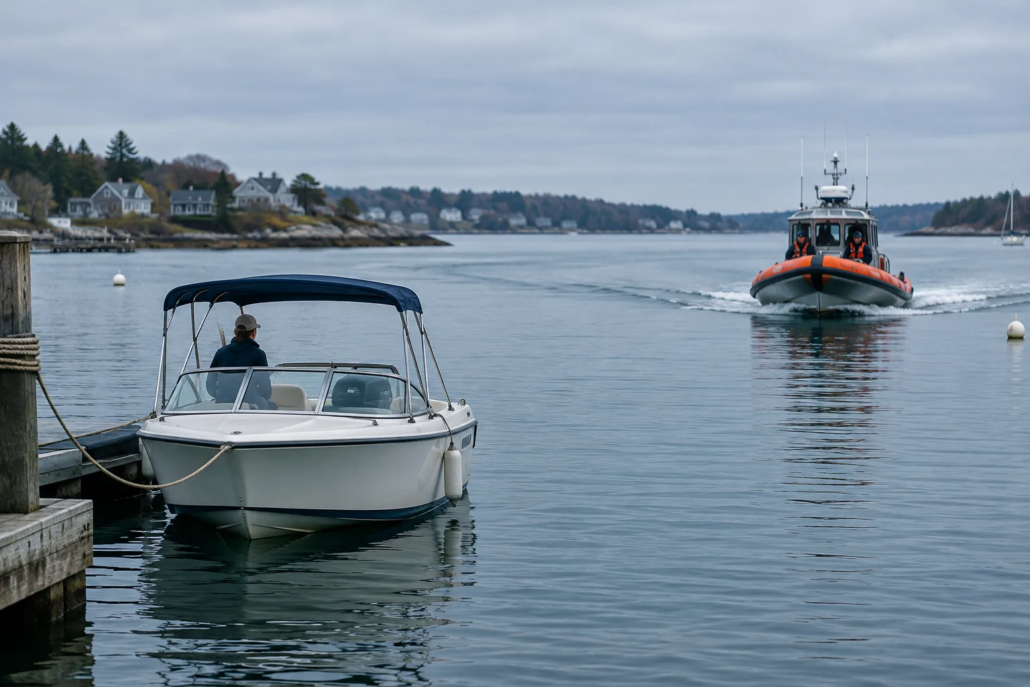
How Can Rescue Delays Affect a Portsmouth Boating Claim?
A passenger hurt on a boat may face a second problem after the initial accident: symptoms or injury can worsen while help is delayed, first aid is limited, or transfer to shore is difficult. For people researching a delayed rescue boating injury claim in Portsmouth, NH, the key question is often whether later events contributed to additional harm—not simply who caused the original accident. The answer depends on the facts, the applicable law, and reliable evidence about what happened and when.
Independence Law Maine and New Hampshire helps readers understand how maritime and personal injury issues can overlap. This article explains how an operator’s response may be evaluated, how to distinguish the initial injury from later aggravation, and what records may help establish a timeline. A boating incident near Portsmouth may involve the Piscataqua River, Portsmouth Harbor, or nearby coastal waters, but the location alone does not determine which legal rules apply.
Can a vessel operator be responsible when an injury worsens during a delayed rescue?
An injury claim may involve more than the event that first caused harm. A passenger might be injured in a fall or collision, then experience additional harm while waiting for assistance, receiving limited first aid, or being moved from the vessel. Whether the operator may be responsible for that later worsening depends on the duty that applied, the circumstances of the emergency, and whether the response—or lack of response—contributed to a distinct or increased injury.
A vessel operator’s role can include making reasonable decisions in an emergency, such as summoning appropriate help and taking steps that are safe under the conditions. That does not mean an operator must attempt a dangerous rescue, provide medical treatment beyond their ability, or guarantee that a passenger’s condition will not worsen. Weather, distance from shore, vessel capability, available communications, and the passenger’s condition may all matter.
The legal framework can also vary. Some incidents may raise maritime-law questions, while others may be evaluated under state personal injury law; the facts about the vessel, trip, and location can be relevant. For Portsmouth readers, a local address does not by itself establish which law applies. The firm’s Portsmouth maritime injury guidance explains why the maritime context may need to be assessed case by case.
Who controlled the vessel and rescue response?
The person operating the vessel may have had immediate control over communications, first aid supplies, navigation, and the decision to return to shore or meet rescuers. Other parties may have separate roles, but responsibility for the post-accident response is a distinct question from responsibility for the original accident. For example, who may be responsible in a rental-boat accident can depend on the operator’s, owner’s, or rental business’s involvement and control.
How to distinguish the original injury from later aggravation
A claim involving worsening symptoms often turns on causation: what harm came from the initial accident, and what additional harm, if any, may be connected to later events? This can be difficult to answer because symptoms may change over time, and a delay does not automatically prove that the delay caused additional injury. Medical professionals assess health questions; legal analysis considers the available evidence and applicable standards without substituting for medical judgment.
A useful timeline may record:
- When and how the original accident occurred, including what the passenger reported or appeared to experience.
- When the operator or others learned of the injury and what communications followed.
- What assistance was offered, what decisions were made, and when outside help was contacted.
- When the passenger reached shore or medical care, and what symptoms or findings were documented at that point.
For example, a passenger might be hurt when a vessel ladder fails, then face a separate delay while being transferred to shore. The equipment event and the later response are not automatically the same cause of harm. Reviewing Portsmouth boat-ladder and equipment injury claims can help illustrate the difference between an initial accident mechanism and a later allegation that the injury worsened during rescue or transfer.
A timeline does not establish liability on its own. It can, however, help an attorney and qualified medical professionals assess whether the evidence supports a connection between the emergency response and additional harm. In Portsmouth, New Hampshire, as elsewhere, the applicable legal rules may depend on where the vessel was operating and the nature of the trip. Laws vary by location and can change, so a case-specific review matters.
What evidence can clarify the emergency response and responsibility?
Evidence can help reconstruct the period between the accident and the passenger’s arrival at medical care. Details may fade, and electronic records or vessel materials may not remain available indefinitely. Preservation should be handled lawfully and safely; this general information is not a direction to take any particular step in an individual matter.
Potentially useful material may include medical records, photographs, messages, call logs, witness names and observations, incident reports, and available vessel records. Records created close in time to the event may help show when symptoms were reported, when assistance was requested, and what transfer or rescue decisions were made. The records that can help prove maritime negligence page offers additional context about documenting a maritime incident.
When reviewing a possible delayed-response issue, an attorney may consider questions such as:
- Who was operating the vessel, and who had practical control of its communications and movement?
- What assistance was available, and what conditions affected a safe response?
- What do contemporaneous messages, reports, and witness accounts say about the timing?
- Do medical records distinguish the passenger’s condition before and after the delay or transfer?
Depending on the location and circumstances, a response may involve agencies such as the U.S. Coast Guard or New Hampshire Marine Patrol. The existence or availability of an agency report is not guaranteed, and an agency report does not necessarily decide civil responsibility. Portsmouth-area incidents may occur in settings with different rescue access and conditions, so the actual route, waterway, and response matter more than a generalized assumption about how quickly help should arrive.
Frequently Asked Questions
Does a delayed rescue automatically make the vessel operator liable?
No. A delay alone does not establish that an operator was legally responsible or that it caused a passenger’s condition to worsen. An assessment may consider the operator’s role, what was reasonably possible in the circumstances, available communications and assistance, and evidence connecting the response to additional harm. Maritime and state-law issues may differ depending on the incident. A licensed attorney can evaluate how the facts and applicable law fit together.
What if the passenger was already injured before help was delayed?
The original injury does not necessarily answer whether later events contributed to additional harm. The initial accident and any claimed aggravation may need to be evaluated separately, using the event timeline and medical records. A changing condition can have multiple possible explanations, and determining medical causation is not something a general article can do. The evidence and applicable legal standards will shape whether a later-response issue is relevant.
Can a difficult transfer to shore be part of the claim?
It may be relevant, depending on what happened and whether the transfer is alleged to have caused or worsened an injury. Conditions such as distance, weather, vessel access, and the availability of a safe alternative may be part of the factual picture. A difficult transfer does not, by itself, establish fault. Records and witness accounts may help explain the choices made and the passenger’s condition during that period.
Does an incident report prove what caused the worsening?
Not necessarily. A report may preserve observations or a sequence of events, but it may not answer every question about medical causation or civil responsibility. The report’s scope, source, and detail matter, as do medical records, witness accounts, and other evidence. Whether a report can be obtained or used may depend on the circumstances and applicable rules. An attorney can help assess its role in a particular matter.
How Independence Law Maine and New Hampshire Can Help
Independence Law Maine and New Hampshire is dedicated to helping injured people understand the questions that may arise after a boating accident. The firm can evaluate how the original event, the rescue response, medical documentation, and the vessel’s location may relate to a potential claim. For people in Portsmouth, New Hampshire, that review can include considering whether maritime law, state law, or both may be relevant, without assuming every incident follows the same rules.
If a passenger’s condition worsened while waiting for help, the firm is committed to fighting for the client’s rights and carefully evaluating the available facts. Contact Independence Law Maine and New Hampshire to request a free consultation or case evaluation and discuss your circumstances.
Disclaimer: The information in this article is for educational purposes only and does not constitute legal advice. Laws vary by location and may change; contact a qualified attorney licensed in Portsmouth, New Hampshire, for advice specific to your situation.

Leave a Reply
Want to join the discussion?Feel free to contribute!