
Can Portsmouth Dockworker Work Fall Under the Longshore Act?
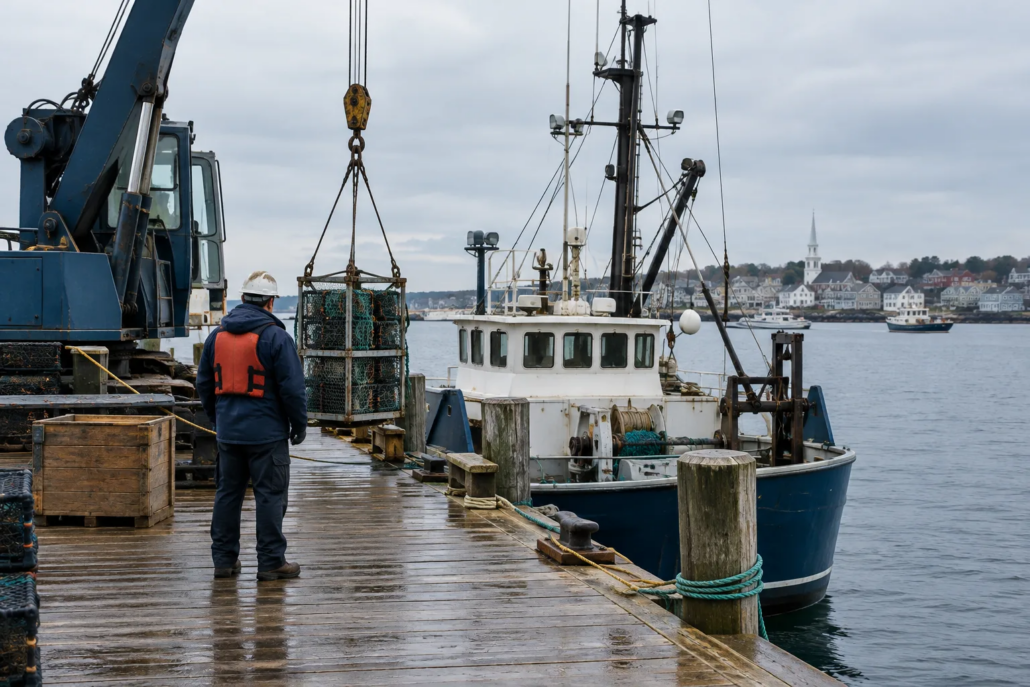
A worker injured while securing cargo, handling lines, or moving equipment on a Portsmouth waterfront may wonder whether the Longshore and Harbor Workers’ Compensation Act (LHWCA) applies. A Portsmouth dockworker injury under the Longshore Act is not determined by the injury alone: the worker’s duties, employer, and the precise place where the incident occurred can all matter. Independence Law Maine and New Hampshire helps readers understand these questions as part of the broader maritime injury landscape. This article explains the federal law’s basic coverage framework, how dock work differs from vessel crew work, and which records may help describe the incident and the worker’s role. Because an injury can involve more than one legal framework, getting the facts organized can help an attorney assess which rules may be relevant.
When might a Portsmouth dockworker injury fall under the Longshore Act?
The LHWCA is a federal workers’ compensation law for certain employees engaged in maritime employment on or near navigable waters. Coverage generally involves two related questions: whether the worker’s job falls within covered maritime work, and whether the injury happened in a qualifying location. A job title such as “dockworker” may be relevant, but it does not answer either question by itself.
The work being performed may matter
Covered work can include tasks such as loading or unloading vessels, handling cargo, building or repairing ships, and other qualifying harbor work. The task being performed when an injury occurred may help show the nature of the worker’s regular duties. For example, how a mooring-line snapback injury can happen can illustrate a waterfront hazard, but the hazard alone does not establish LHWCA coverage.
A worker’s role may also differ from that of a vessel’s master or crew member, who generally falls outside the LHWCA’s employee coverage and may raise different maritime-law questions. The distinctions can be fact-specific; how vessel duties can affect a commercial fisherman’s injury claim offers a useful comparison, not a determination of dockworker coverage.
The injury location can be important
The law’s location requirement generally covers certain maritime work performed on navigable waters or on adjoining areas customarily used for loading, unloading, repairing, or building vessels. A dock, terminal, or waterfront worksite in Portsmouth, New Hampshire, may warrant a closer look, but being near the water is not enough on its own. The precise location and how it is used can matter.
How employer and worksite details affect coverage
A coverage review may look beyond the incident site to the employment relationship. Relevant questions can include who hired or paid the worker, who directed the work, what the employer does, and whether the job regularly involved maritime tasks. Workers hired through a contractor or staffing company may have more than one business involved in the work arrangement, so identifying each company and its role can be useful.
The LHWCA is administered by the U.S. Department of Labor’s Office of Workers’ Compensation Programs, including its Division of Longshore and Harbor Workers’ Compensation. That federal process is distinct from New Hampshire’s state workers’ compensation system. Which system may apply depends on the worker’s circumstances and the governing law; living or working in Portsmouth does not, by itself, resolve the question.
After an injury, it can help to preserve information that describes both the incident and the work relationship, such as:
- The date, time, and exact location of the injury, including the dock, terminal, vessel, or nearby work area.
- The task underway, equipment or cargo involved, and any instructions or work assignment.
- The names and contact details of the direct employer, contractor, staffing company, and supervisor, if applicable.
- Incident reports, photographs of the area or equipment, witness details, work schedules, and duty records.
- Medical-care records and notes showing when and where care was received, without altering or annotating original records.
These materials may help clarify what happened and the worker’s duties; they do not establish eligibility by themselves. For additional guidance on records that can help document a maritime injury, consider how work, incident, and medical information fit together. Portsmouth waterfront workers may also want to review Portsmouth maritime injury legal information when learning about local maritime injury questions.
What to keep in mind after a waterfront injury
A clear, timely account can be useful when the worker, employer, and insurer are sorting out how an incident occurred. If possible, note the work being done, the location, the equipment involved, who was present, and when the injury was reported. Keep copies of communications and records, and distinguish what was personally observed from what someone else reported.
Do not assume that a dock or port injury automatically falls under the LHWCA, or that a different workers’ compensation system necessarily applies. Coverage and potential claims can depend on the worker’s duties, the worksite, the employment arrangement, and other facts. Some injuries may also raise questions about a third party or a separate maritime claim. Those possibilities should not be confused with LHWCA benefit eligibility, and one framework does not automatically establish another.
Deadlines and notice requirements may apply under federal or state law, and they can differ based on the type of claim and circumstances. An injured worker can ask an attorney familiar with maritime and workers’ compensation issues to review the facts and explain which rules may be relevant. This is especially useful when the job involved both dockside tasks and time aboard a vessel, or when several employers or contractors were involved. No single record or detail decides every case, but organized information can make the situation easier to evaluate.
Frequently Asked Questions
Does a dockworker have to be on a vessel when injured for the Longshore Act to apply?
Not necessarily. The LHWCA’s location requirement can include certain adjoining waterfront areas used for maritime work, not only the deck of a vessel. However, location alone is not enough: the worker’s duties and employment circumstances also matter. Whether a particular Portsmouth worksite qualifies depends on how the area is used and the facts surrounding the job and injury.
Could a contractor’s employee be covered by the Longshore Act?
Possibly. Being employed through a contractor or staffing company does not automatically resolve whether the LHWCA applies. The kind of work performed, the location, and the employment relationship may all be relevant. It can help to identify the entities that hired, paid, supervised, or assigned the worker, then have the circumstances reviewed under the law that may apply.
Is the Longshore Act the same as New Hampshire workers’ compensation?
No. The LHWCA is a federal workers’ compensation law administered through the U.S. Department of Labor, while New Hampshire has a separate state workers’ compensation system. Which framework may apply depends on the work and other facts. A worker’s address or the fact that an injury occurred in Portsmouth does not alone decide which system governs.
What if my job included both dock work and time aboard a vessel?
A mixed role can make the coverage analysis more fact-specific. The nature and regularity of the worker’s duties, the connection to a vessel, and the circumstances of the injury may matter. Keep available job descriptions, schedules, work assignments, and incident details. An attorney can assess how those facts relate to the LHWCA or other potentially relevant maritime rules.
How Independence Law Maine and New Hampshire Can Help
Independence Law Maine and New Hampshire is dedicated to helping injured waterfront workers understand the legal questions that may arise after a maritime injury. The firm can review information about the worker’s duties, employer, worksite, and medical care to help evaluate which legal framework may be relevant. Each situation is different, and an initial discussion can help identify questions that may need further attention.
If you were injured while working on or near the Portsmouth waterfront, contact Independence Law Maine and New Hampshire to request a free consultation or case evaluation. The firm is committed to fighting for workers’ rights and can discuss your circumstances without promising a particular outcome.
The information in this article is for educational purposes only and does not constitute legal advice. Contact a qualified attorney authorized to practice in the jurisdiction that applies to your matter for advice specific to your situation.

Leave a Reply
Want to join the discussion?Feel free to contribute!