
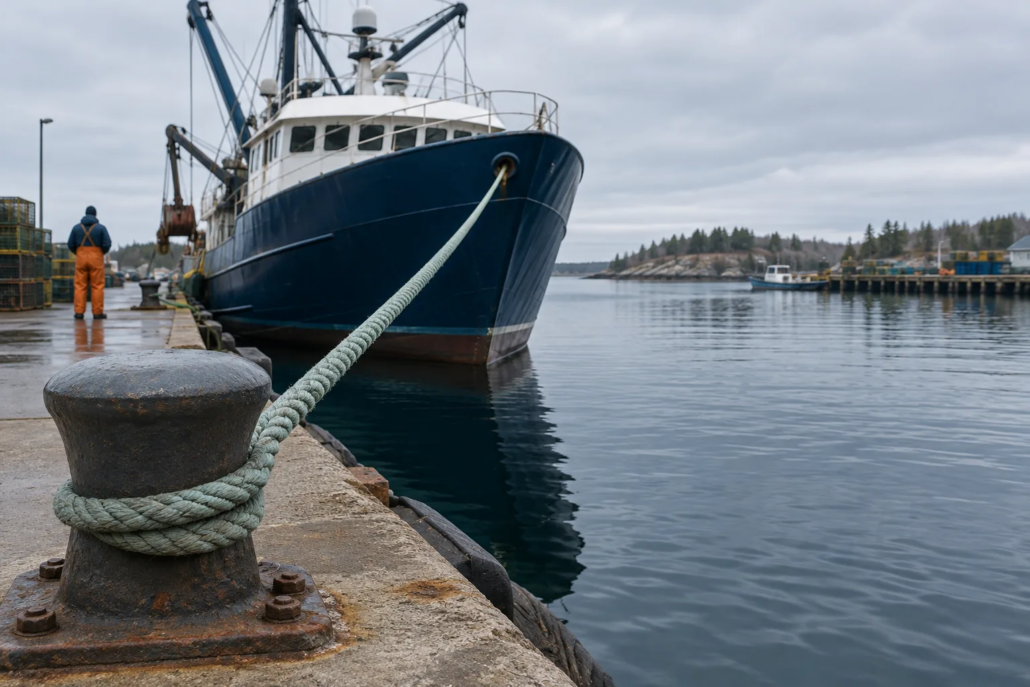
Why Do Mooring-Line Injuries Happen to Maine Workers?
A mooring line can look ordinary while it is under tension. But if it parts, slips free, or is released suddenly, stored force can send the line whipping through a work area. A mooring line injury in Maine may happen in moments, leaving a deckhand or dockworker with little time to react. The risk is not limited to the line itself: nearby fittings, vessel movement, and where people are standing can all matter.
For workers in Portland Harbor, or on maritime jobs along the Penobscot River near Bangor, understanding how a snapback hazard develops can help make sense of an incident afterward. Independence Law Maine and New Hampshire helps readers understand the issues that can arise after maritime injuries. This article explains why mooring lines can cause serious harm, which work and equipment details may be important, and what an injured worker or family may want to preserve. The circumstances of each incident are different, and the legal rules can depend on a worker’s role and the vessel involved.
How a Mooring Line Injury in Maine Can Happen
Mooring lines secure a vessel to a dock, buoy, or other point. When a line is tightened, it carries tension. If it breaks, comes off a fitting, or is released while still loaded, the line can recoil or move abruptly. Workers sometimes call the area where a line may travel during a failure a snapback zone. Its path is not always obvious: a line can deflect off equipment or move in an unexpected direction.
A line does not have to strike someone directly to cause harm. A worker may be hit by a line or nearby hardware, knocked off balance, or forced into equipment. A sudden movement can also contribute to a fall or another impact. The severity depends on factors such as the amount of tension, line material and configuration, the distance to the worker, and what is in the line’s path.
Why the hazard can be hard to predict
A line’s appearance alone may not reveal its condition or load. Wear, damage, how the line is led through fittings, and changes in vessel position can affect what happens under tension. A vessel shifting with wind, current, or wake may place changing force on a line. These are possible contributors, not proof that any one factor caused a particular injury.
Where work positioning fits
A worker’s location and task can affect exposure. Crew members may need to handle lines in confined or busy areas, sometimes while coordinating with others. A safe work plan may identify areas to avoid, but the actual procedure, visibility, deck layout, and timing are important to understanding what occurred. These considerations can matter during mooring operations in Portland as well as other Maine ports and waterfront workplaces.
What Incident Details May Explain a Snapback Injury?
After a mooring-line accident, details can help show how the job was organized and how the line moved. A worker or family may want to make a record, as circumstances allow, of:
- The work assignment: What task was the worker given, who gave it, and what part of the mooring operation was underway?
- The line-handling procedure: How was the line routed, tensioned, secured, or released? Were instructions or hand signals used?
- The line and equipment condition: Was there visible wear, damage, a displaced fitting, or a recent repair? A qualified inspection may be needed to assess equipment condition.
- Position and movement: Where were workers standing, and was the vessel moving, surging, or changing position?
- Communication and witnesses: What warnings or commands were exchanged? Who was present and may have seen or heard the event?
Records that may help document a maritime negligence claim can include work schedules, incident reports, photographs, maintenance materials, and witness information. These items may be held by different people or organizations, and some records may not remain available indefinitely. Any documentation should be gathered in a way that respects workplace safety and applicable policies; no one should put themselves at risk or interfere with equipment or an investigation.
Local context can matter, but a worker’s home city alone does not determine the legal framework. A Portland dockworker, a crew member aboard a vessel, and a worker performing a shoreside assignment may have different roles and legal considerations. The vessel, employer relationships, and tasks being performed are among the facts that may matter. For a broader explanation of how vessel duties can affect a Maine maritime injury claim.
What an Injured Worker May Want to Do Next
In the hours and days after an incident, a clear account can become harder to reconstruct. If the worker or family is able, it may be useful to note the sequence of events, the specific assignment, line-handling steps, vessel movement, safety instructions, and names and contact information of witnesses. Preserve relevant communications and copies of records that are already available. Photographs may help document a scene or equipment, if they can be taken safely and without disturbing an investigation.
A worker’s health and immediate safety should take priority over gathering information. Medical questions belong with qualified healthcare professionals; this article does not diagnose injuries or recommend treatment. Reporting requirements and workplace procedures can vary, so an individual’s circumstances may call for different steps. When in doubt about what records exist or how they may relate to a claim, a maritime attorney can explain general options based on the facts.
The legal framework may depend on whether a person was a vessel crew member, a shoreside worker, or performing another role, as well as where and how the work took place. Maine and federal maritime rules may be relevant, and the applicable rules can vary by location and may change over time. Readers seeking general information about legal options after a maritime worker injury can review how role and incident circumstances may affect the analysis. Those same questions can arise for workers in Bangor and Portland, even though the specific facts of each job differ.
Frequently Asked Questions
Can a mooring line injure someone even if it does not break?
Yes. A line may move suddenly if it slips, comes free from a fitting, or is released while under tension, even when it has not visibly broken. A worker may also be injured by nearby hardware, a sudden vessel movement, or a fall while reacting. The precise cause depends on the event, line setup, and work conditions, so the phrase “snapback” does not by itself explain every injury.
What is a snapback zone during mooring work?
A snapback zone is an area where a tensioned line may travel if it parts or releases. The likely path can depend on how the line is arranged, the fittings it contacts, and the vessel’s position. It may not be a simple straight line, and the area of risk can be difficult to judge from appearance alone. Work procedures and the conditions at the time are important context.
Which witnesses may be relevant after a mooring accident?
People who handled the line, gave instructions, operated or observed the vessel, or saw the event may have useful firsthand information. Others may know about the work assignment, prior equipment concerns, or the procedure being followed. A record of names and contact details can help identify potential witnesses, but what any person observed must be evaluated in context and does not establish fault on its own.
Does every mooring-line injury follow the same legal rules in Maine?
No. The applicable legal framework may depend on the worker’s job, whether the work was aboard a vessel or shoreside, the relationship to the vessel and employer, and where the incident occurred. Maine law, federal maritime law, or other rules may be relevant depending on the facts. A licensed attorney can assess the specific circumstances; general information cannot determine which rules apply to an individual claim.
How Independence Law Maine and New Hampshire Can Help
Independence Law Maine and New Hampshire is committed to helping injured maritime workers and families understand the questions that can follow a mooring-line accident. The firm can evaluate the available information, including the worker’s assignment, the line-handling procedure, equipment and vessel circumstances, and witness accounts. Because maritime claims can involve distinct rules based on a worker’s role and the incident setting, an individualized review may help clarify which issues deserve attention. If you or a family member has questions after a mooring-line injury in Portland, Bangor, or elsewhere in Maine, contact the firm to request a free consultation or case evaluation.
Disclaimer: The information in this article is for educational purposes only and does not constitute legal advice. Contact a qualified attorney licensed in Maine for advice specific to your situation.

Leave a Reply
Want to join the discussion?Feel free to contribute!